
Tuckpointing vs. Repointing: What Your St. Louis Brick Home Really Needs
Confused about brick repair? Learn the key differences between tuckpointing and repointing to protect your historic St. Louis home from our freeze-thaw cycles.
Key Takeaways
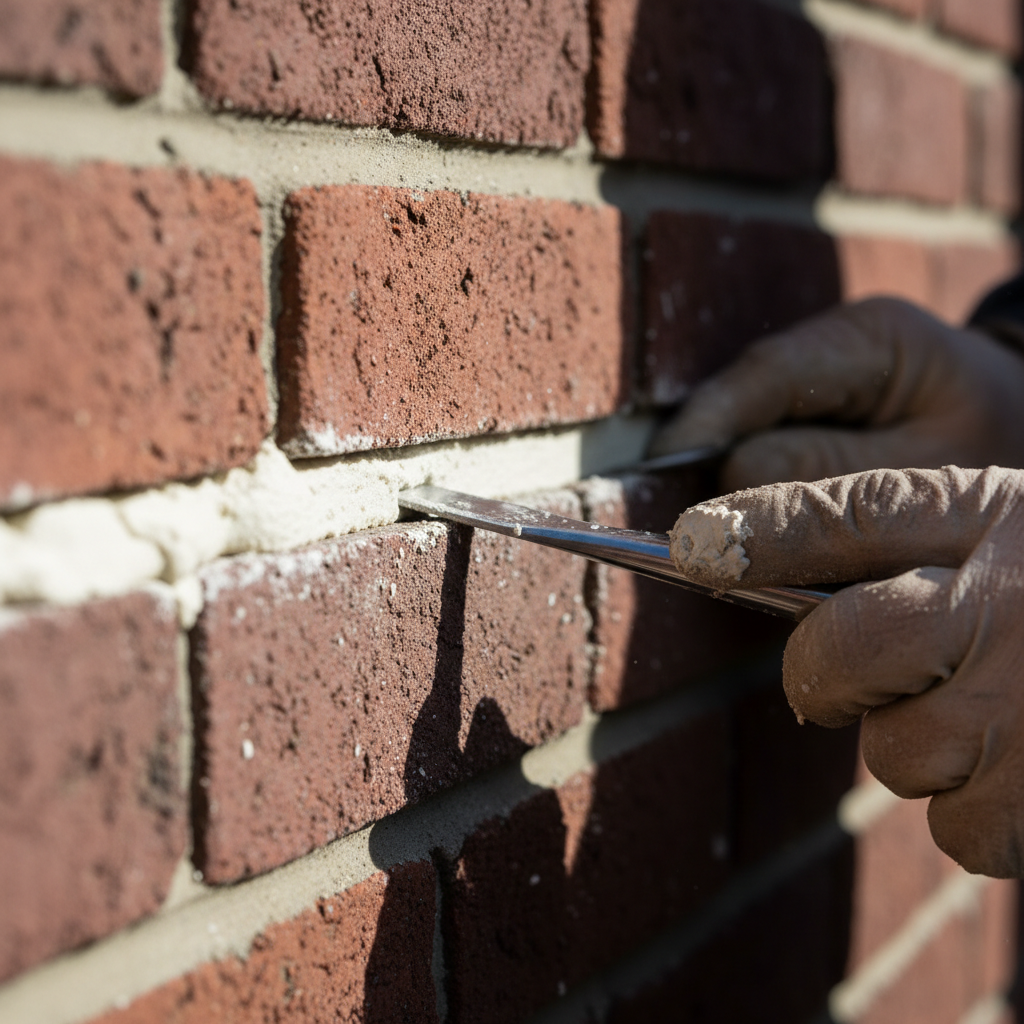
- Repointing is the process of removing damaged mortar and replacing it with new mortar to maintain structural integrity.
- Tuckpointing is a decorative technique that uses two different colors of mortar to create the illusion of perfectly straight, thin joints.
- St. Louis homes, especially in areas like The Hill and Soulard, often require structural repointing before any cosmetic tuckpointing can be applied.
- Our local freeze-thaw climate is the primary culprit for mortar deterioration in historic masonry.
- Regular masonry maintenance prevents expensive water damage and preserves the historic value of your property.
Are Tuckpointing and Repointing the Same Thing?
While the terms are often used interchangeably by homeowners and even some contractors, they describe two distinct masonry processes. At its core, repointing is a functional repair meant to keep your brick walls stable, while tuckpointing is a specific aesthetic finish designed to make joints appear sharper and more uniform.
Since 1987, the team at Anchor Masonry has seen the confusion firsthand. In the St. Louis area, we often find homeowners asking for 'tuckpointing' when their home is actually suffering from severe structural mortar decay that requires a full repoint. If you live in an older home in Tower Grove or Lafayette Square, understanding this distinction is the first step toward a lasting repair.
Why Do These Terms Get Mixed Up?
Confusion stems from the fact that modern masonry contractors often perform both tasks simultaneously. Historically, repointing was strictly functional—you ground out the old, crumbly mortar and packed in new lime-based mortar to seal the gaps. Later, masons developed tuckpointing to hide irregularities in the brickwork.
They would fill the joint with a mortar that matched the color of the brick, then cut a thin, straight line down the center and fill it with a contrasting 'putty' (usually white or light-colored). This created a perfectly straight, thin line that made even hand-made, imperfect bricks look refined. Today, people use 'tuckpointing' as a catch-all term for any mortar repair, but it is important to know which one your home needs to ensure the work lasts.
Comparison Table: Repointing vs. Tuckpointing
| Feature | Repointing | Tuckpointing | | :--- | :--- | :--- | | Primary Goal | Structural integrity | Aesthetic enhancement | | Process | Removing/replacing mortar | Mortar matching + thin color line | | Best For | Deteriorated, crumbling joints | Making irregular joints look uniform | | Durability | Critical for water defense | Decorative finish |
Which One Does Your St. Louis Home Need?
Your home likely needs repointing if the mortar is cracked, washing away, or missing entirely, but it might benefit from tuckpointing if you want to restore that crisp, historic look common in places like Benton Park.
In St. Louis, our climate is brutal on masonry. We have wet springs and freezing winters that cause the 'freeze-thaw' cycle. When water gets into loose mortar, it freezes, expands, and pushes the masonry apart. If you see chunks of mortar missing from your chimney or the side of your home, you have a structural issue. We don't just 'tuckpoint' over that; we perform a deep repoint to ensure moisture stays out of your home's foundation and structure. Once the structural work is sound, we can finish the look to match the historic character of your neighborhood.
What Should You Expect for Masonry Repairs?
Repairs should be viewed as an investment in the long-term value and safety of your property. Costs can vary based on the height of the chimney, the condition of the brick, and the accessibility of the walls. A standard mortar repair project can range from $800 to several thousand dollars depending on the scope of the labor-intensive hand-tooling required.
Because every house is different—a Victorian in Soulard has different mortar needs than a bungalow on The Hill—we always inspect the brick texture and the original mortar composition. You want a contractor who uses the right mortar mix (usually lime-based for older homes) to ensure the masonry can 'breathe.' If the mortar is too hard, like modern Portland cement, it can actually cause the soft historic bricks to crack.
How Can You Get an Honest Assessment?
We recommend calling a professional who has been working in the St. Louis area for decades to ensure your repair is done correctly the first time. At Anchor Masonry, we have been family-owned and operated since 1987, and we take pride in our BBB A+ rating. We believe in being upfront with homeowners about what is a priority fix and what can wait.
If you are worried about the condition of your brickwork, don't wait until you see water damage inside your walls. For a free estimate and a professional look at your masonry, give us a call today at (314) 775-4557. I am Adam Scott, and I am happy to help you preserve your home's character for years to come.
Adam Scott
Owner, Anchor Masonry - 38+ years of masonry experience in St. Louis