
Preventing Water Damage Through Your Brick Walls: A St. Louis Homeowner's Guide
Learn how water damages brick and mortar in St. Louis homes, warning signs to watch for, and proven prevention strategies.
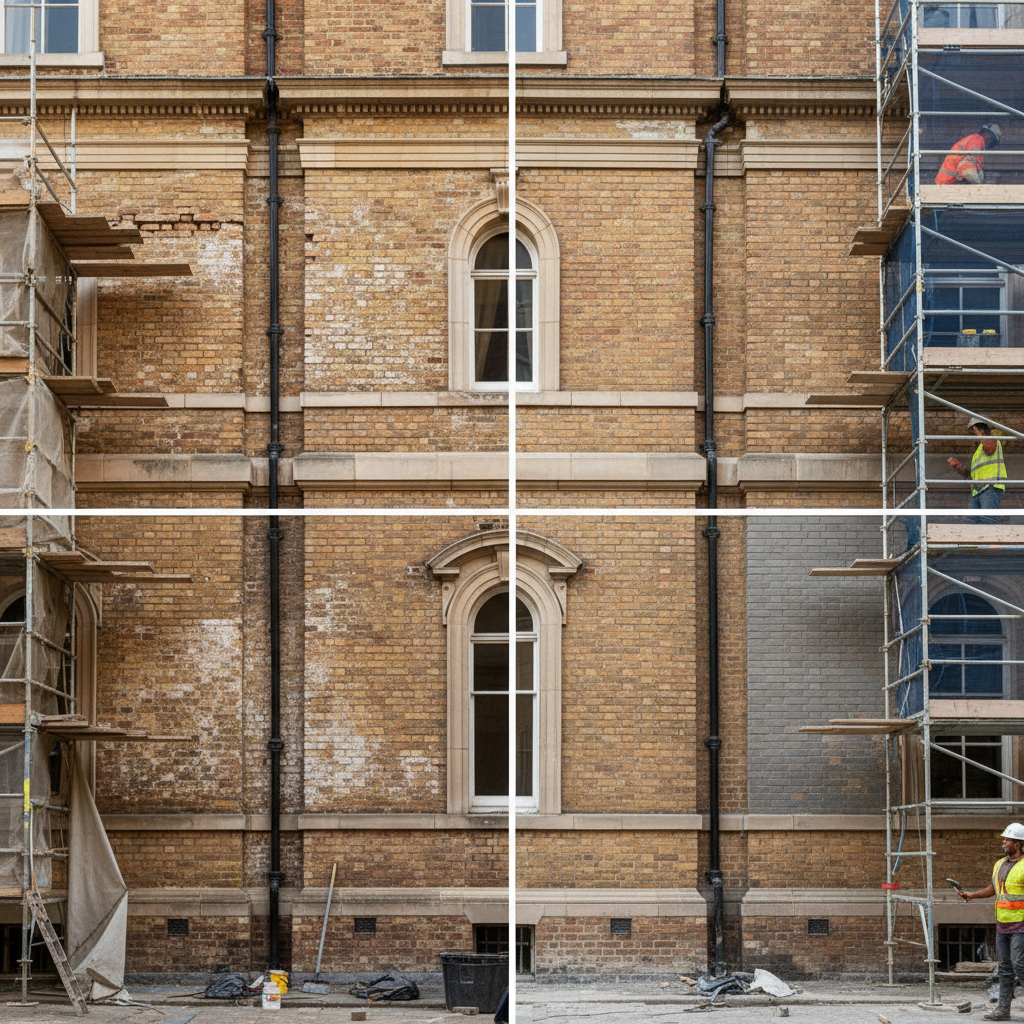
Understanding How Water Damages Brick and Mortar
Water is the #1 enemy of masonry. In St. Louis, with our high humidity, heavy rains, and freeze-thaw winters, water damage is a constant threat. Understanding how water gets in and what it does helps you prevent costly repairs.
How Water Infiltrates Masonry
Failed Mortar Joints
The most common entry point. When mortar deteriorates, it creates gaps between bricks:
- Hairline cracks — Too small to see but large enough for water
- Crumbling mortar — Obvious gaps and holes
- Separated joints — Mortar pulling away from brick edges
Result: Water flows directly into the wall cavity.
Cracked or Spalling Brick
Brick itself can become a water entry point:
- Hairline cracks — From settling or thermal expansion
- Spalled surfaces — Flaking brick face absorbs water like a sponge
- Missing brick — Obvious holes in the wall
Result: Water penetrates deep into the brick and wall structure.
Failed Flashing
Flashing is the metal barrier that directs water away from vulnerable areas:
- Where roof meets chimney
- Above windows and doors
- At wall intersections
- Where different materials meet
Result: When flashing fails, water is directed INTO the wall instead of away from it.
Clogged or Missing Weep Holes
Weep holes are small openings at the bottom of brick walls that let water escape:
- Often found above foundation or at lintels
- Should be clear and open
- Sometimes accidentally sealed during painting or caulking
Result: Water gets in but can't get out, accumulating inside the wall.
Poor Drainage
Water problems aren't always from above:
- Clogged gutters — Water overflows and runs down walls
- Improper grading — Soil slopes toward foundation, not away
- Missing downspout extensions — Water dumps right next to foundation
- High water table — Groundwater pushes up through foundation
Result: Water wicks up from the ground (rising damp) or saturates the foundation.
What Water Does to Masonry
Freeze-Thaw Damage
This is the big one in St. Louis:
- Water soaks into brick or mortar
- Temperature drops below freezing
- Water expands as it freezes (about 9% expansion)
- This expansion creates internal pressure
- Brick or mortar cracks, spalls, or pops
- More water enters the damaged area
- Cycle repeats, damage accelerates
One freeze-thaw cycle might not do much damage. Hundreds of cycles over a winter will destroy unprotected masonry.
Efflorescence
White, powdery deposits on brick surfaces:
- Caused by water dissolving salts inside brick/mortar
- Water carries salts to the surface
- Water evaporates, leaving salt deposits
What it means: You have active water infiltration. Efflorescence itself isn't damaging, but it's a warning sign.
Mold and Mildew
Constant moisture creates ideal conditions for biological growth:
- Black or green staining on brick
- Musty odors
- Can spread to interior walls
Health concern: Mold spores can affect indoor air quality and trigger allergies.
Structural Damage
Long-term water infiltration can:
- Rust steel lintels (causing them to expand and crack brick)
- Rot wood framing behind masonry
- Deteriorate insulation
- Damage drywall and finishes
- Compromise structural integrity in severe cases
Signs of Water Damage
Exterior Warning Signs
- White staining (efflorescence)
- Dark, damp-looking areas on brick
- Crumbling or missing mortar
- Cracked or spalling brick
- Vegetation growing in mortar joints
- Stained or deteriorated flashing
- Water marks below windows or doors
Interior Warning Signs
- Water stains on walls or ceilings
- Peeling paint or wallpaper
- Musty odors
- Damp spots on baseboards
- Efflorescence on interior masonry (basements, fireplaces)
- Mold growth
Preventing Water Damage
Immediate Actions (This Weekend)
- Clean gutters — Remove debris, ensure proper flow
- Extend downspouts — Water should discharge 5+ feet from foundation
- Check grading — Soil should slope away from house
- Clear weep holes — Make sure they're not blocked
- Trim vegetation — Keep plants 12+ inches from masonry
Short-Term (This Month)
- Seal small cracks — Hairline cracks can be sealed with masonry caulk
- Repair damaged flashing — Replace corroded or missing flashing
- Address efflorescence — Clean with mild acid solution, but fix the water source first
- Check window and door caulking — Replace failed caulk
Long-Term (This Year)
- Tuckpoint failing mortar — Don't wait until it's completely gone
- Replace damaged brick — Before water damage spreads
- Consider breathable water repellent — Professional-grade products that let masonry breathe while shedding water
- Install or repair drainage systems — French drains, improved grading, etc.
What NOT to Do
❌ Don't use waterproof paint or sealers — These trap moisture inside the brick, making problems worse.
❌ Don't ignore small problems — A $300 repair today prevents a $3,000 repair next year.
❌ Don't power wash on high settings — Can damage brick and force water into cracks.
❌ Don't caulk over weep holes — They're there for a reason.
❌ Don't use hard mortar for repairs — Portland cement traps moisture; use lime-based mortar for historic brick.
Related Articles
- The Complete Guide to Tuckpointing in St. Louis
- Brick Repair vs. Replacement: When to Save and When to Replace
- Maintaining Your Historic Masonry: A Seasonal Guide
When to Call a Professional
If you're seeing multiple warning signs, interior water damage, or structural concerns, get a professional assessment. Anchor Masonry provides free inspections and can identify the source of water infiltration and recommend the right repairs.
The key is catching water damage early. Once water gets into your walls, every freeze-thaw cycle makes it worse. Address the source, repair the damage, and your masonry will protect your home for decades.
Adam Scott
Owner, Anchor Masonry - 38+ years of masonry experience in St. Louis