
Tuckpointing a 1923 Red-Brick Cottage on The Hill
How we repointed a soft red-brick cottage on The Hill using historically compatible lime mortar — and why the wrong mortar would have destroyed the brick.
The Project
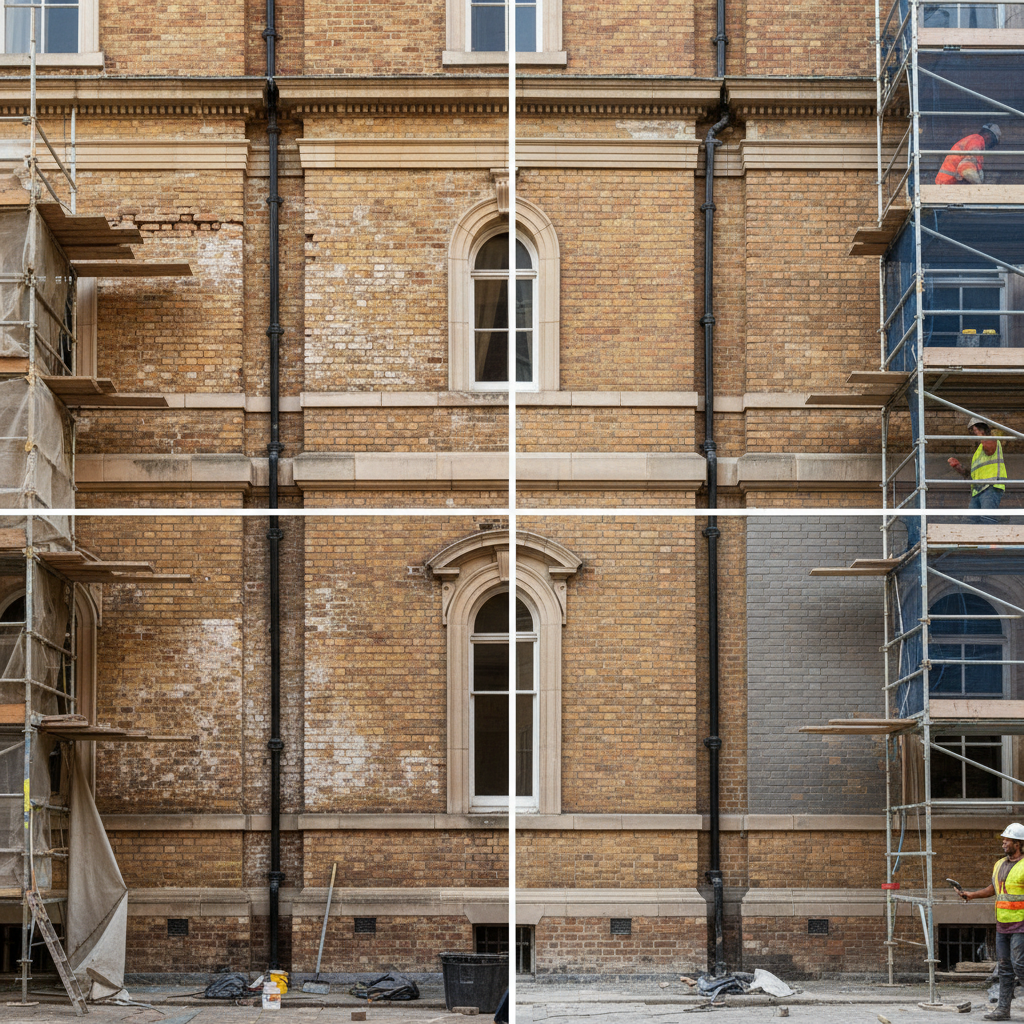
A homeowner on Macklind Avenue noticed mortar dust collecting on the sidewalk beneath their 1923 Italian-immigrant cottage. The soft red brick was sound, but the original lime-rich mortar had eroded past the point where a simple touch-up would hold.
What We Found
The Hill's brick was fired locally and stays relatively soft. Repointing it with modern Portland cement — the default for many contractors — would trap moisture inside the brick. Over a few winters, that moisture freezes, expands, and pops the face off the brick. We see it constantly on homes that were "repaired" with the wrong mortar.
Our Approach
- Raked out the old mortar to a consistent depth without cutting into the soft brick faces.
- Mixed a lime-rich mortar that's softer than the brick itself, so the mortar fails before the brick ever does.
- Color-matched the joints to The Hill's warm red-brown tone instead of leaving glaring gray lines across the facade.
- Cleaned the coal-soot staining with a gentle, no-pressure wash that protected the fragile brick surface.
The Result
The cottage reads as original from the curb, but the joints are now weather-tight for another generation. Most importantly, the brick is still the sacrificial layer's backup — exactly how historic masonry is meant to work.
If you own a red-brick home on The Hill, the single most important question to ask any mason is: what type of mortar will you use? If the answer is off-the-shelf Portland cement, keep looking.
Adam Scott
Owner, Anchor Masonry - 38+ years of masonry experience in St. Louis