
Beyond Tuckpointing: A Guide to Full Commercial Brick Facade Restoration in St. Louis
Discover what goes into a comprehensive commercial brick facade restoration in St. Louis, from structural lintel repair to historic brick matching.
Key Takeaways
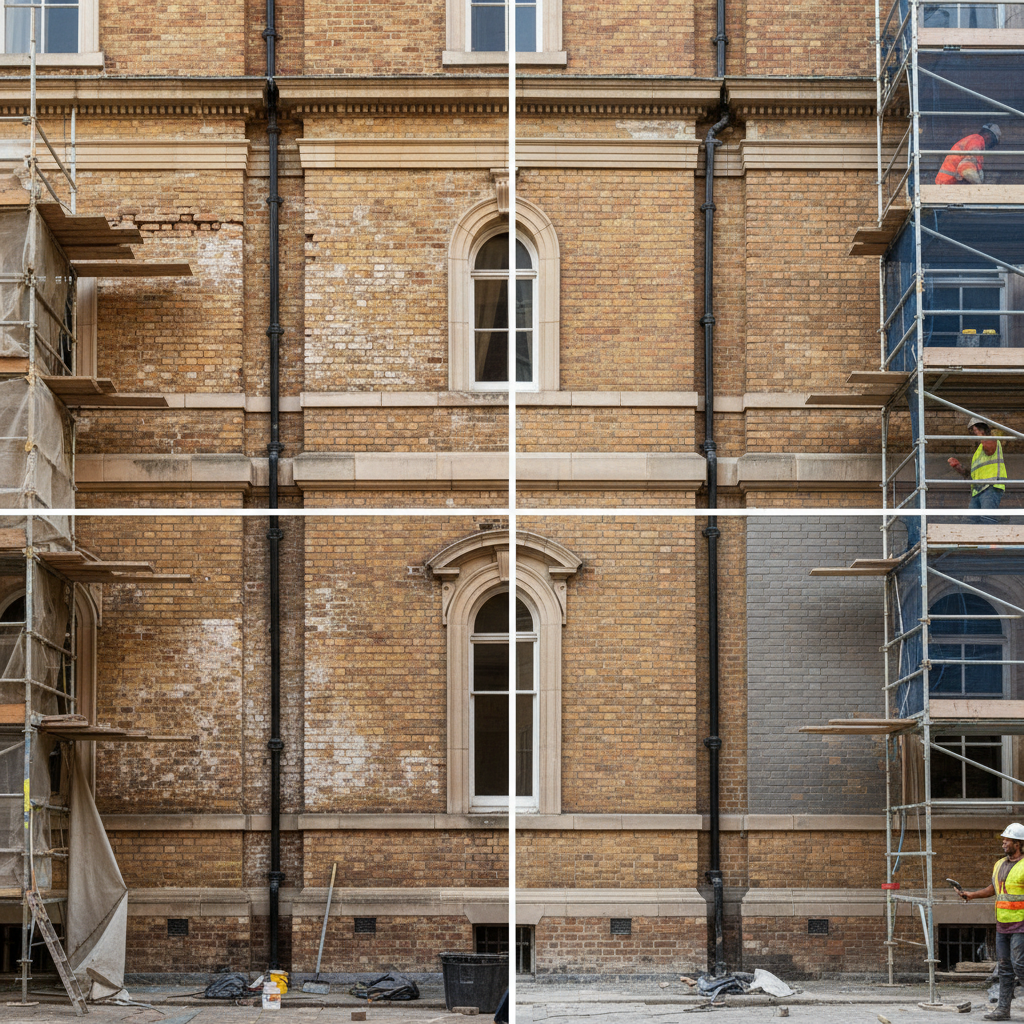
- Full facade restoration involves more than tuckpointing; it addresses structural health including lintels, parapets, and sealant integrity.
- St. Louis’s freeze-thaw cycles aggressively degrade masonry, making preventative maintenance essential for high-rise, warehouse, and storefront assets.
- Commercial restoration requires specialized scaffolding, tenant communication, and adherence to strict city building codes.
- Historic preservation is critical for properties in districts like Soulard, The Hill, and Downtown, requiring precise brick matching.
- Proper capital budgeting for masonry maintenance prevents emergency repair costs and preserves asset value.
Is Tuckpointing Enough for My St. Louis Commercial Building?
No, tuckpointing is only one element of a broader building envelope maintenance strategy. While tuckpointing repairs the mortar joints between bricks, commercial structures in St. Louis—ranging from the historic warehouses of Midtown to the storefronts on Cherokee Street—often face deeper structural challenges. Neglecting issues like rusting lintels or crumbling parapets can lead to significant interior water infiltration, liability risks, and costly emergency repairs. For property managers and commercial owners, a holistic approach to the building envelope is the only way to ensure longevity.
What Components Make Up a Comprehensive Facade Restoration?
A full restoration project includes structural repairs, cleaning, and preventative sealing. When Anchor Masonry assesses a commercial building, we look beyond the mortar joints. We inspect the steel lintels supporting your window and door openings; if they are rusting, they expand and crack the masonry, requiring immediate replacement. We also evaluate the parapet walls at the roofline, which take the brunt of St. Louis weather and are often the first points of failure. Furthermore, cleaning methods like pressure washing must be carefully selected—sometimes using chemical cleaners to remove soot and pollutants without damaging historic surfaces. Finally, sealant replacement around windows and door frames is essential to prevent moisture from entering the wall assembly.
How Do We Handle Historic Brick Matching?
We source historically compatible bricks and mortar that match the specific color, texture, and compressive strength of your original masonry. In districts like Soulard or Downtown, the aesthetics of your storefront are tied to your brand and property value. Using modern, high-strength mortar on historic soft-fired brick can actually cause the brick to crack, which is why we meticulously test existing materials before beginning any replacement work.
Commercial Masonry Services Comparison
| Service Type | Primary Purpose | Typical Scope | Impact on Asset Value | | :--- | :--- | :--- | :--- | | Tuckpointing | Moisture Defense | Joint depth of 3/4" | High (Longevity) | | Lintel Repair | Structural Safety | Steel replacement | Critical (Safety) | | Parapet Rebuild | Water Shedding | Flashing/Cap repair | High (Protection) | | Masonry Cleaning | Aesthetic Appeal | Stain/Soot removal | Medium (Curb Appeal) | | Sealant/Caulking | Air/Water Barrier | Perimeter sealing | High (Efficiency) |
How Do We Manage Tenant Disruption and Safety?
We minimize operational impact by utilizing phased scheduling and prioritizing safety protocols for staff and customers. I understand that for a commercial developer or HOA, shutting down a storefront on The Hill or a parking lot in Midtown is a major headache. We work with you to stage scaffolding, establish safety zones, and communicate project timelines clearly. Our crews are trained to maintain a professional job site, ensuring business continuity remains a top priority throughout the restoration process.
Why Does the St. Louis Climate Matter?
Our region’s extreme freeze-thaw cycles force water into masonry cracks, causing rapid expansion and spalling that necessitates proactive care. When water enters a crack in the fall and freezes during our January cold snaps, it exerts massive pressure on the brick. This cycle is the number one cause of masonry deterioration in St. Louis. Addressing these cracks during the summer or fall is significantly more cost-effective than attempting emergency masonry repairs in the middle of winter.
How Can You Schedule a Commercial Estimate?
To get an accurate assessment of your building’s needs, we recommend a site walk-through to identify hidden structural issues before they become crises. I am Adam Scott, and at Anchor Masonry, we have been serving St. Louis since 1987 with BBB A+ accredited quality. We invite you to walk your property with us so we can provide a realistic plan for your capital budget. Contact us at (314) 775-4557 to schedule your commercial consultation today.
Adam Scott
Owner, Anchor Masonry - 38+ years of masonry experience in St. Louis