
Masonry Restoration for Historic St. Louis Homes: A Complete Guide
Comprehensive guide to historic masonry restoration in St. Louis: techniques, materials, costs, and preserving your home's architectural heritage.
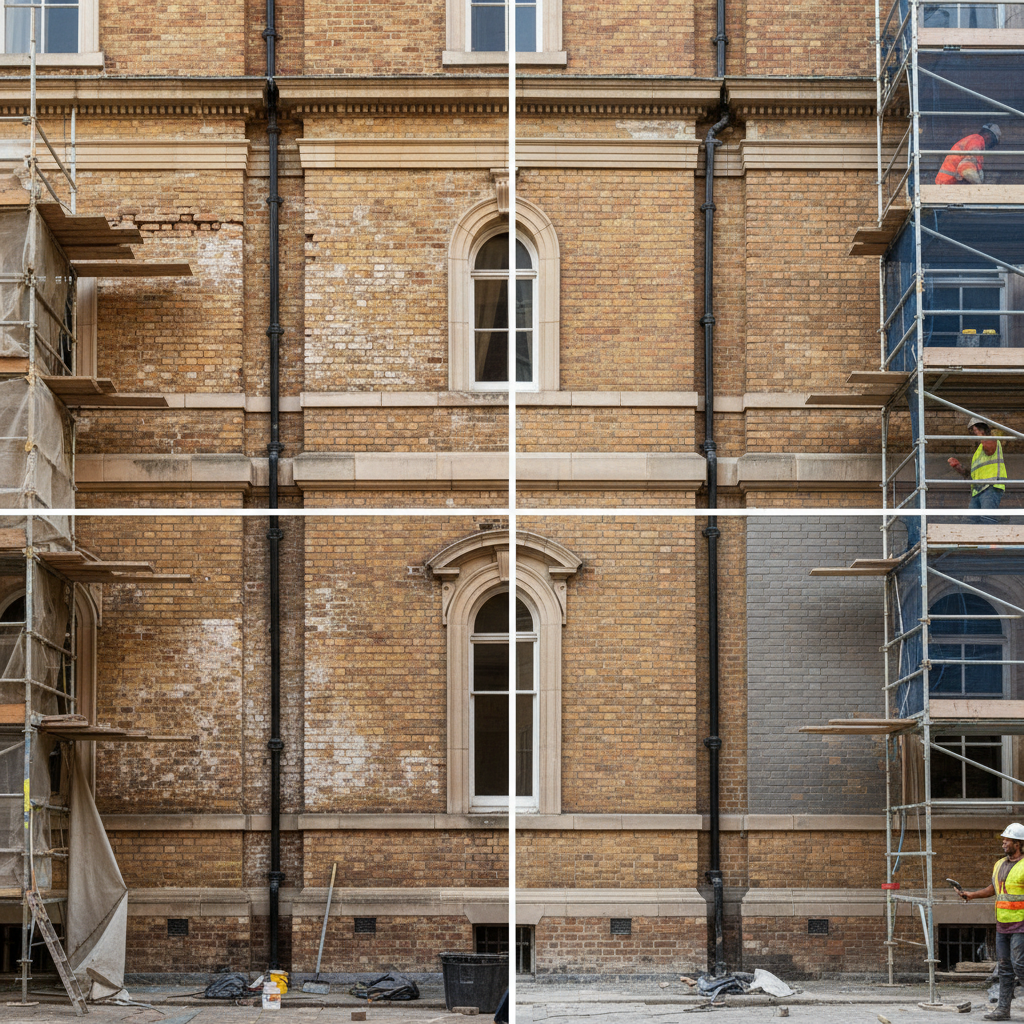
Preserving St. Louis Architectural Heritage
St. Louis has one of the largest collections of historic brick and stone buildings in the United States. From Victorian row houses to Craftsman bungalows, these structures tell the story of our city. Proper masonry restoration preserves that story for future generations.
What Is Masonry Restoration?
Masonry restoration goes beyond simple repairs. It's the comprehensive process of returning historic masonry to its original condition while maintaining structural integrity and historical authenticity.
Restoration vs. Repair
- Repair fixes specific problems (a cracked brick, failed mortar joint)
- Restoration addresses the entire system, often returning it to original appearance and function
Common Historic Masonry Issues in St. Louis
Lime Mortar Deterioration
Most pre-1940 St. Louis homes were built with lime-based mortar, which is softer and more permeable than modern Portland cement mortar. This is actually a good thing — lime mortar allows brick to breathe and flex. But it does wear out.
Signs of failure:
- Crumbling or missing mortar
- Gaps between brick and mortar
- Water infiltration
Restoration approach: Remove failed mortar and repoint with matching lime mortar. Never use hard Portland cement on historic brick — it traps moisture and accelerates deterioration.
Brick Deterioration
Decades of freeze-thaw cycles, moisture, and pollution take their toll on brick.
Signs of failure:
- Spalling or flaking surfaces
- Deep cracks
- Discoloration or staining
Restoration approach: Replace severely damaged brick with salvaged or custom-matched brick. Minor damage can sometimes be consolidated or patched.
Stone Damage
Many St. Louis homes feature limestone, sandstone, or granite accents — foundations, window sills, lintels, and decorative elements.
Signs of failure:
- Cracking or splitting
- Surface erosion
- Staining
Restoration approach: Stone can often be repaired with epoxy consolidation or dutchman repairs (inserting new stone patches). Severely damaged stone may need replacement.
Structural Movement
Settling foundations, failed lintels, or water damage can cause masonry to shift or bulge.
Signs of failure:
- Leaning walls
- Step cracking in mortar joints
- Doors or windows that won't close properly
Restoration approach: Address the underlying cause (foundation repair, lintel replacement) before restoring the masonry.
The Masonry Restoration Process
Phase 1: Historical Research
For significant restoration projects, understanding the original construction is crucial:
- Identifying original brick and stone sources
- Analyzing original mortar composition
- Documenting original joint profiles and patterns
- Researching architectural style details
Phase 2: Condition Assessment
A thorough inspection documents:
- Extent of mortar failure (percentage of joints affected)
- Number and location of damaged bricks or stone
- Structural issues requiring engineering
- Water infiltration points
- Previous repairs (good and bad)
Phase 3: Material Selection
Matching historic materials is critical:
- Mortar: Analyzed for sand gradation, lime content, and color
- Brick: Sourced from salvage yards or custom-manufactured
- Stone: Matched for type, color, and grain pattern
Phase 4: Execution
Restoration work follows best practices for historic preservation:
- Gentle cleaning methods (no sandblasting or high-pressure washing)
- Careful mortar removal to avoid damaging brick edges
- Proper curing of lime mortar (can take weeks)
- Minimal intervention — preserve as much original material as possible
Cost of Masonry Restoration
Restoration is more expensive than standard repairs due to:
- Specialized materials (lime mortar, salvaged brick)
- Skilled labor (not all masons know historic techniques)
- Slower work pace (careful preservation takes time)
- Scaffolding for multi-story buildings
Typical ranges:
- Small restoration (single chimney, small facade section): $5,000-$15,000
- Medium restoration (full front facade): $15,000-$40,000
- Large restoration (entire building): $40,000-$100,000+
Tax Credits and Incentives
St. Louis homeowners may qualify for:
- Federal Historic Preservation Tax Credits (20% of qualified expenses)
- Missouri State Historic Preservation Tax Credits
- Local property tax abatements
These can significantly offset restoration costs for eligible properties.
Related Articles
- The Complete Guide to Tuckpointing in St. Louis
- Maintaining Your Historic Masonry: A Seasonal Guide
- Chimney Restoration: Keeping Your Historic Chimney Safe and Functional
Choosing a Restoration Contractor
Not all masonry contractors are qualified for historic restoration. Look for:
- Experience with lime mortar and historic techniques
- Portfolio of completed restoration projects
- Understanding of preservation guidelines
- References from similar projects
Anchor Masonry has been restoring St. Louis historic masonry since 1987. We understand the unique challenges of working with old brick and stone, and we're committed to preserving the character that makes these buildings special.
Adam Scott
Owner, Anchor Masonry - 38+ years of masonry experience in St. Louis