
Building With Brick in St. Louis: A Homeowner’s Guide from Anchor Masonry
Planning a masonry project in St. Louis? Learn the essential differences between solid brick and veneer to ensure your home stays durable and beautiful.
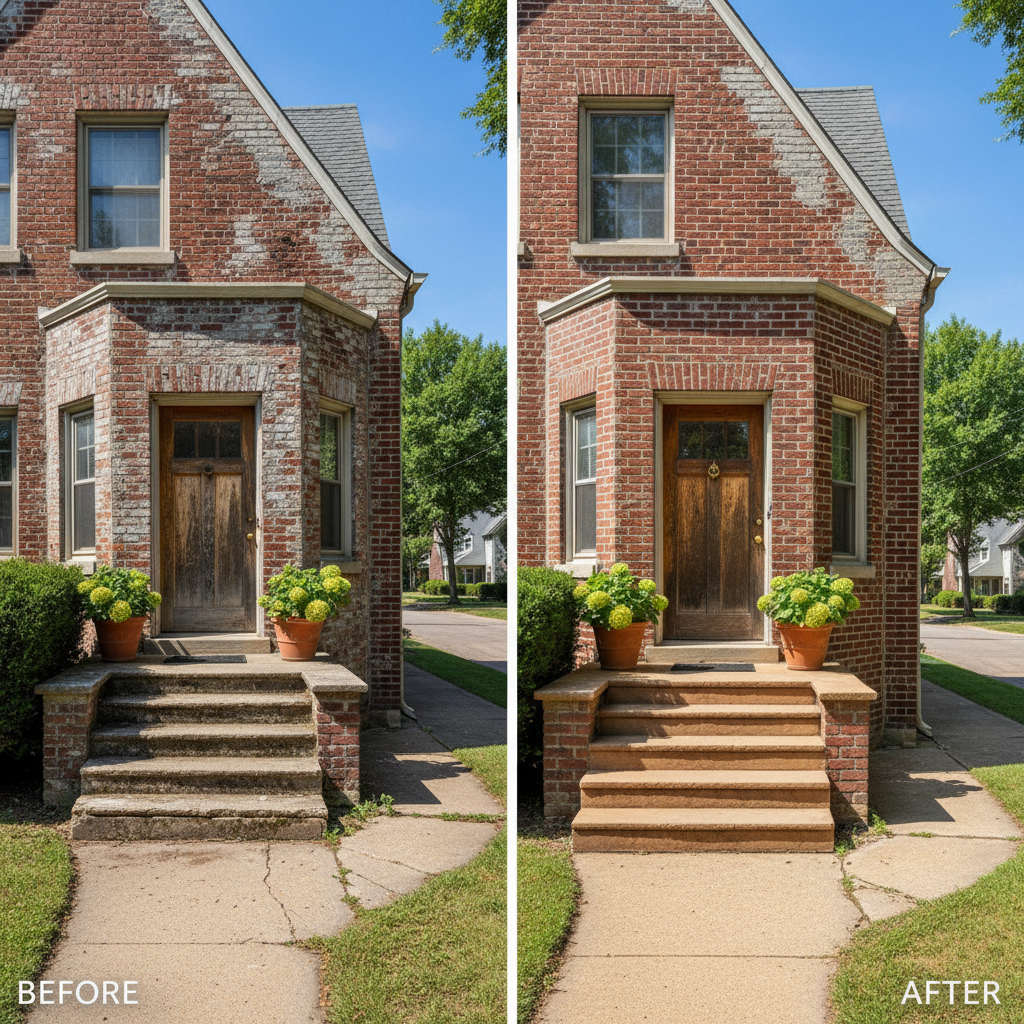
Key Takeaways
- Solid brick offers structural integrity and long-term value, while brick veneer acts primarily as a decorative, protective exterior layer.
- St. Louis weather—specifically our freeze-thaw cycles—demands high-quality mortar and professional waterproofing to prevent cracking.
- Choosing the right brick type involves considering both aesthetic fit for neighborhoods like The Hill or Soulard and the practical drainage needs of the wall.
- Improper installation is the leading cause of expensive future repairs, making professional craftsmanship a necessary investment rather than an option.
- Early detection of mortar decay can save homeowners thousands by avoiding the need for full wall reconstruction.
What is the difference between solid brick and brick veneer?
Solid brick is a structural component that bears the weight of your home, whereas brick veneer is a non-structural outer layer used for its appearance and weather resistance. In many of our historic neighborhoods like Tower Grove or Soulard, you will find original solid masonry construction, which is prized for its thermal mass and longevity. Veneer, on the other hand, is attached to the home's framing using metal ties. Understanding this distinction is vital because the maintenance requirements—and the potential for water infiltration—differ significantly between the two.
Why does the St. Louis climate matter for masonry?
Our local freeze-thaw cycles are the primary enemy of brickwork, as water that seeps into small cracks expands when it turns to ice, causing bricks to spall or mortar to crumble. In the Midwest, moisture management is everything. When building or repairing, we prioritize mortar mixes that allow the wall to 'breathe' properly. If you trap moisture inside by using an incorrect mortar type, that water has nowhere to go but out, often causing the face of the brick to pop off during the next cold snap.
| Feature | Solid Masonry | Brick Veneer | | :--- | :--- | :--- | | Structural Role | Supports load | Non-load bearing | | Installation | Thick wall depth | Attached via metal ties | | Maintenance | Tuckpointing brick faces | Repointing and tie inspection | | Cost | Higher initial investment | More cost-effective |
How do I choose the right brick and mortar for my project?
Selection should be based on your home's architecture and the specific performance requirements of your exterior environment. When we work on historic homes, we often match the vintage brick size and color to maintain the original character of the house. Equally important is the mortar; we use specific PSI (pounds per square inch) ratings that ensure the mortar is slightly softer than the brick itself. If the mortar is too hard, the brick will take the stress of building movement and crack, which is a much more expensive problem to fix than simply repointing the mortar joints.
When is it time to call a professional for brick repair?
Homeowners should look for telltale signs like cracks in the mortar joints, water staining near the chimney, or bricks that look like they are 'flaking' or losing their front layer. If you see white powdery residue, known as efflorescence, it is a sign that salt and moisture are moving through your masonry. Don't wait until you see a bulging wall or a collapsing chimney to give us a call. Catching these issues early allows us to perform targeted repairs, which are significantly cheaper than full-scale reconstruction.
Should I attempt DIY brick repair or hire an expert?
While small cosmetic fixes might seem manageable, structural masonry and tuckpointing require precise knowledge of material compatibility to prevent long-term damage. I am Adam Scott, and at Anchor Masonry, we have been serving St. Louis since 1987. We see far too many DIY projects where homeowners used the wrong mortar, leading to severe damage to the original brickwork. Because masonry is a specialized trade, professional installation ensures that your walls are properly flashed, weep holes are functional, and the structural integrity of your home remains intact.
How can I get a professional assessment for my home?
Building or repairing with brick is an investment in your home's longevity and curb appeal. Whether you are in a classic home on The Hill or a modern build in the suburbs, proper maintenance is the best way to protect your property value. If you have concerns about the state of your brickwork or are planning a new project, we are here to help with an honest, practical assessment. Give Anchor Masonry a call today at (314) 775-4557 to schedule your free estimate. We pride ourselves on doing the job right the first time, ensuring your home stays sturdy for decades to come.
Adam Scott
Owner, Anchor Masonry - 38+ years of masonry experience in St. Louis